D R McCoy

Who am I?

Computer science, human–computer interaction. Student @ Victoria University of Wellington.

I'm a student at Victoria University of Wellington studying a Bachelor of Design Innovation, majoring in interaction design and computer science with a minor in industrial design. Before university I spent several years in electrical trade work. I work across hardware, software and interaction design. This site is one example.

Hellomy name is

D R McCoy

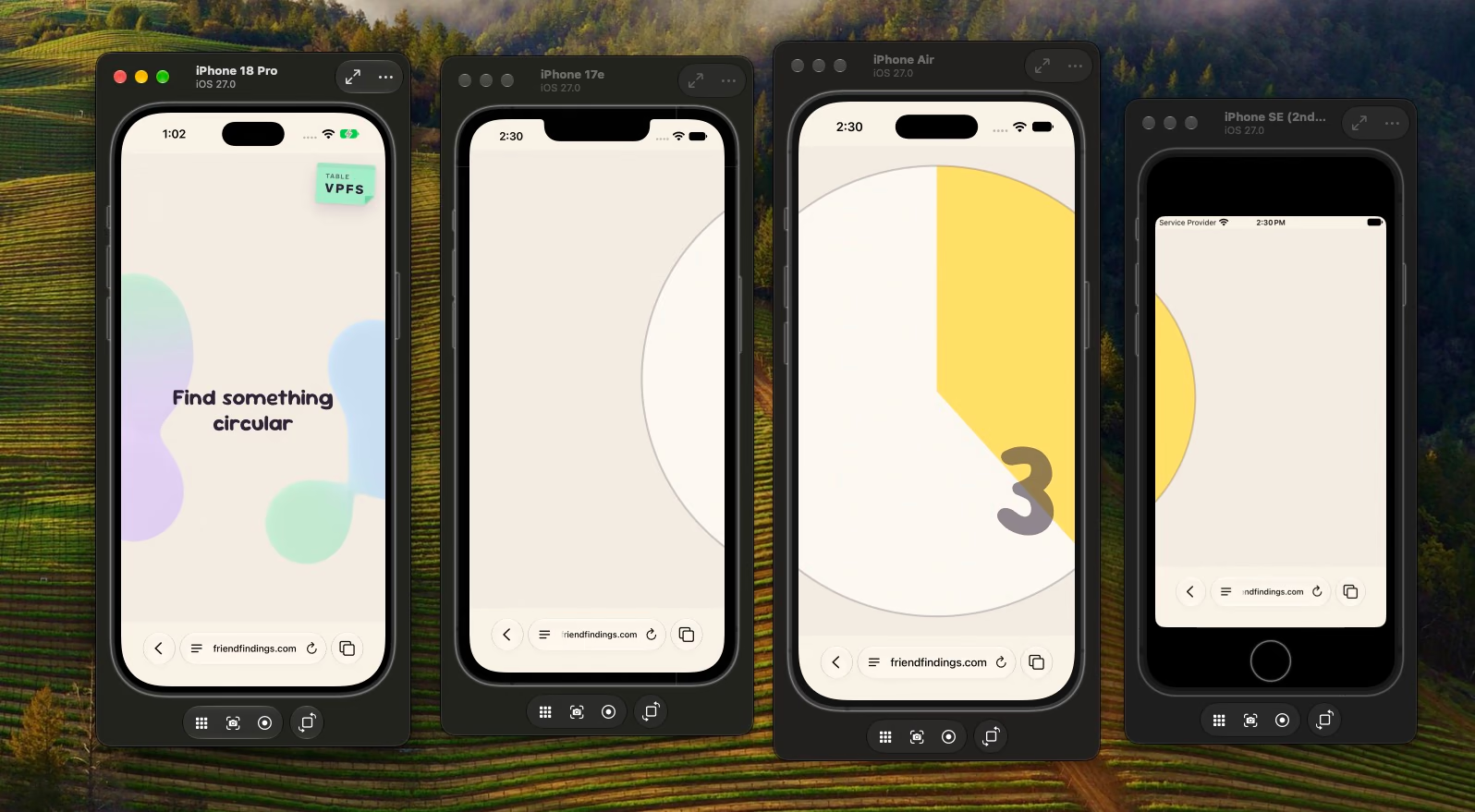
Host phone showing the task and three player phones showing the countdown
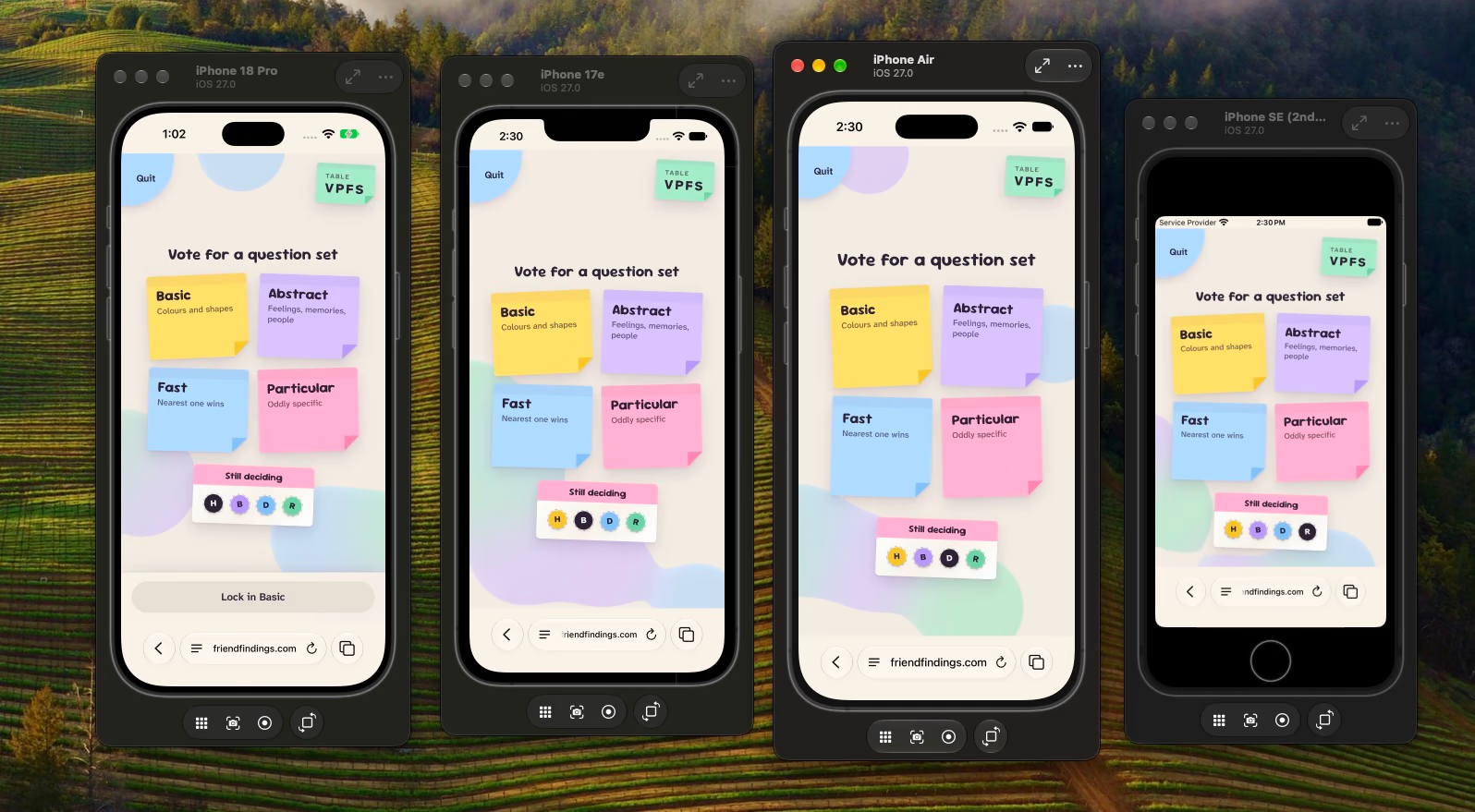
Four phone simulators showing the question-set vote
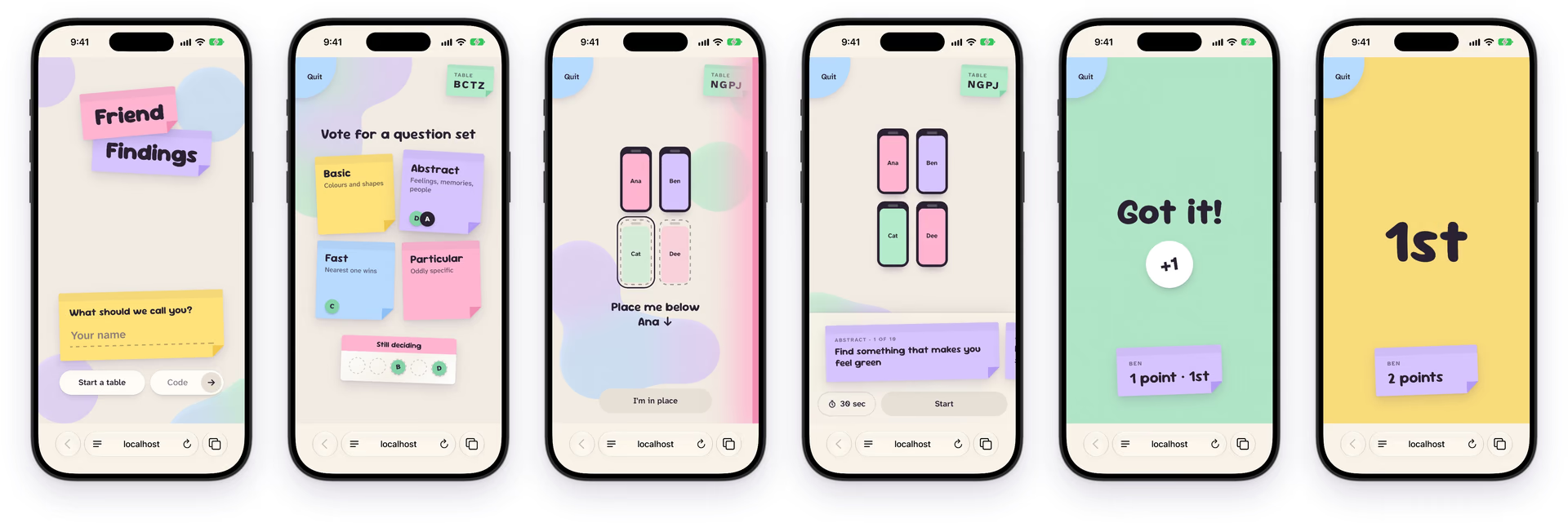
Six phone screens showing joining, voting, placement, scoring and final results
Watermarked output
Residual signal amplified 10x
Cover image

D R MCCOY

WELLINGTON, NEW ZEALAND

RECEIPT FOR YOUR VISIT

PRIVACY · LICENCES · CREDITS

ORDERBCC7513

PRINTED05 OCT 2026

BILLED TOYOU, THE VISITOR

COOKIES00.00

ANALYTICS00.00

TRACKERS00.00

PERSONAL DATA00.00

TYPEFACES60.00

TOTAL0.00

STATUSN/C

HOSTCLOUDFLARE.

TYPEATKINSON HYPERLEGIBLE NEXT

& MONO. BRAILLE INSTITUTE,

SIL OPEN FONT LICENSE.

CAVEAT. THE CAVEAT PROJECT

AUTHORS, SIL OPEN FONT

LICENSE.

NEW COMPUTER MODERN & MONO,

GUST FONT LICENSE.

COURIER PRIME,

SIL OPEN FONT LICENSE.

WORKWORDS, IMAGES AND PROJECTS

© 2026 D R MCCOY.

ALL RIGHTS RESERVED.

MARKSGITHUB, HUGGING FACE AND

ARE.NA MARKS ARE THEIR

OWNERS'.

***

THANK YOU FOR VISITING.

Large Language Model detection

D R McCoy

Core thesis

With the recent research into watermarking LLM generated text, it stood out to me that the way in which current tools attempt to detect LLM-written content is flawed and inaccurate.

This project builds upon my previous research into a detection model but takes a very different approach.

Most of the LLM detection systems that exist currently try and learn:

“What does AI writing look like visually?”

Such as “not X, but Y”, overuse of the em-dash, filler words and overly dramatic writing.

When, instead the detector should operate on the properties of token probability space rather than the surface level writing style.

Target: P(machine generated | x) where the generator may be:

  • an open model;
  • a closed model;
  • a model unseen during detector training;
  • instruction-tuned or base;
  • sampled using different temperatures/top-p/top-k settings;
  • partially edited by a human.

The objective is not intended to gain perfect attribution to a specific given model, rather it is robust evidence that a sequence behaves like text produced through neural autoregressive sampling.

Research hypothesis

Given a text sequence, we want to evaluate every token under several open weight observer language models.

We know that LLM text goes through different trajectories through this joint space than human text, but the signal probably does not exist in any one statistic like for instance perplexity.

Instead it is more likely to exist in the joint structure of:

  • token probability;
  • token rank;
  • entropy;
  • probability margins;
  • probability curvature;
  • cross-model agreement;
  • probability residuals;
  • transition behaviour;
  • distribution-tail choices;
  • local and document-level variance.

Conceptual architecture

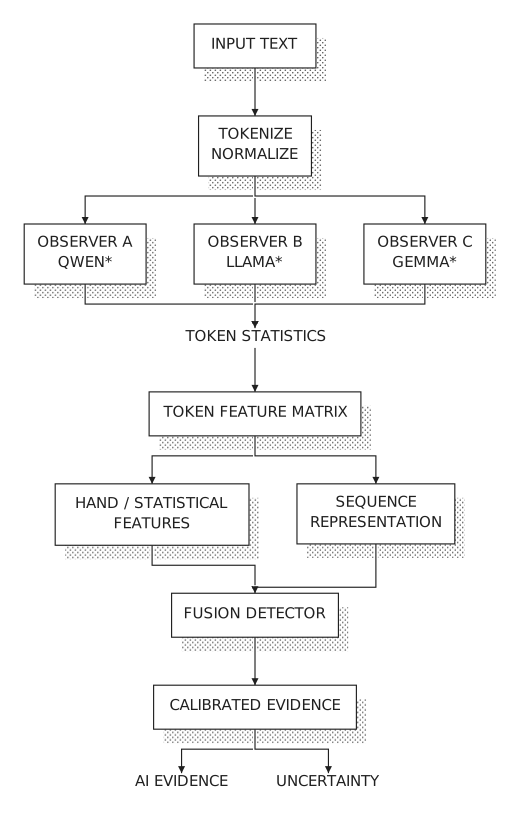
Conceptual detection architectureTokenised and normalised input passes through three proposed observers. Token statistics form a feature matrix, supplying statistical features and a sequence representation. A fusion detector produces calibrated AI evidence and uncertainty. Observer model names retain the asterisks in the original diagram.INPUT TEXTTOKENIZENORMALIZEOBSERVER AQWEN*OBSERVER BLLAMA*OBSERVER CGEMMA*TOKEN STATISTICSTOKEN FEATURE MATRIXHAND / STATISTICALFEATURESSEQUENCEREPRESENTATIONFUSION DETECTORCALIBRATED EVIDENCEAI EVIDENCEUNCERTAINTYOpen full-size diagram

*listed models are examples

Reviewed pilot, exploratory only

Two observers (Qwen3.5-4B, LFM2.5-2.6B), 24 document summary each, logistic regression. Human and machine pairs grouped; 60 / 14 / 9 independent cohorts in train / validation / test.

model split docs AUROC accuracy FPR recall
fused 48 train 146 0.992 0.966 0.055 0.986
fused 48 validation 36 0.960 0.861 0.167 0.889
fused 48 test 22 0.967 0.909 0.182 1.000
Qwen mean surprisal test 22 0.942 0.864 0.273 1.000
LFM mean surprisal test 22 0.802 0.727 0.273 0.727

Notes:

  • Specified models as they were already on my system, their choice should not be especially noted.